
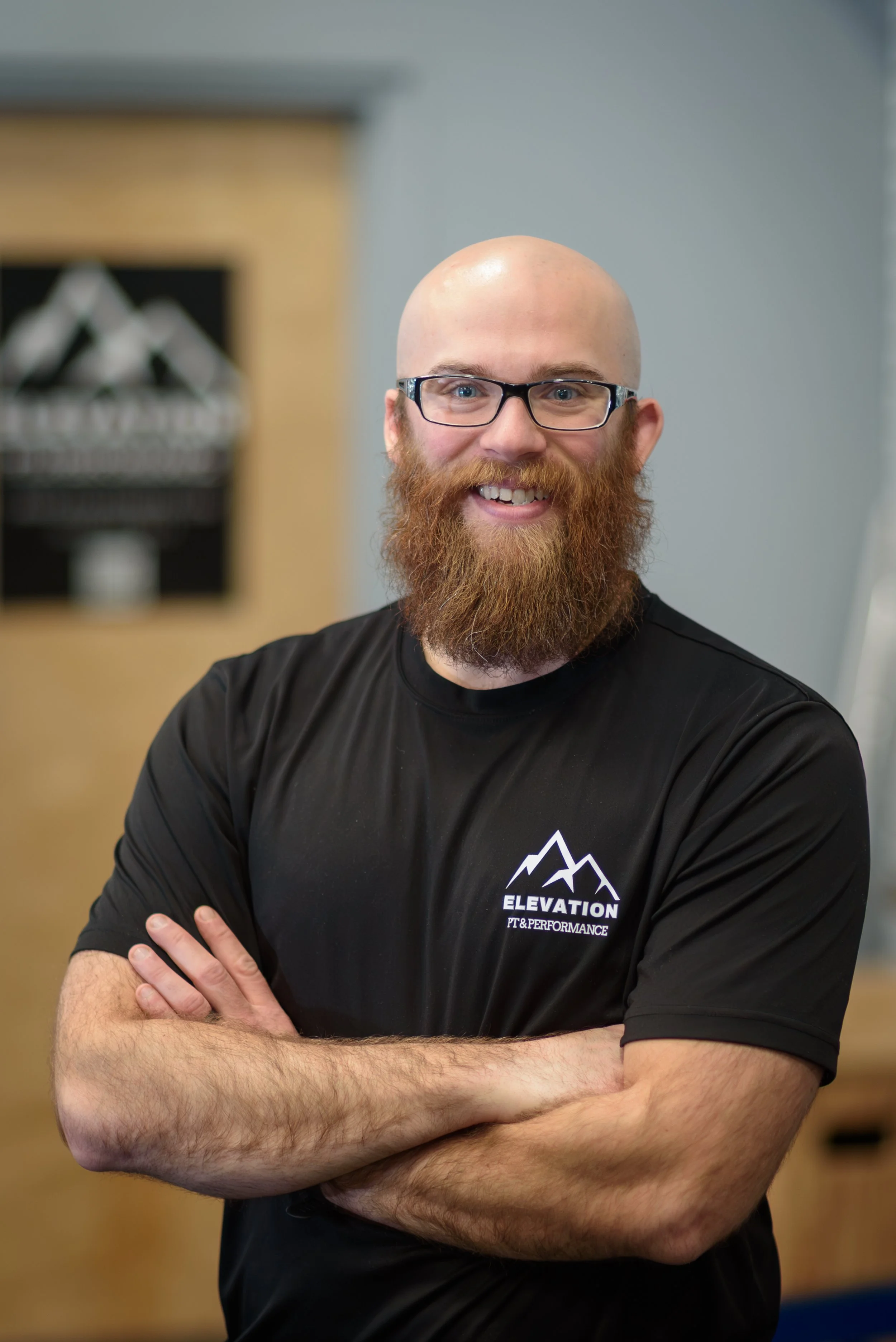
Dr. Maurice Disley, DPT of Elevation PTP, is the official recovery partner of the 2026 Happy Valley Half Marathon & 5K. He has worked with so many runners in the Pioneer Valley and we couldn’t be more excited for him to help you be ready to run your best race at the Happy Valley Half Marathon & 5K!
Below are Dr. Disley’s tips for how to prepare yourself to run your best Happy Valley Half Marathon & 5K:
Happy Valley is honest about its difficulty: almost all the climbing happens twice, and if you train for those two moments, the rest of the course gives the time back.
Here’s the shape of your race. You get a flat mile inside Look Park to warm up, then a bike path. The real work starts around mile 2: the course climbs through mile 4, finishing with the steepest pitch of the day on Kennedy Street. Then it tips downhill, rolling through quiet roads until mile 7, goes flat and fast through Florence, and throws one last climb at you on Spring Street at mile 10, when your legs are most tired. From Leeds it’s a flat bike path sprint to the finish.
Three things to build between now and October:
1. Hills on tired legs. The Spring Street climb at mile 10 is the race’s real test. Once a week, put your hill work at the END of a run, not the start. Even 4 x 60-second strong uphill efforts after 40 minutes of easy running teaches your legs to climb when they’d rather not.
2. Downhill durability. Miles 4 through 7 descend, and downhills (not uphills) are what trashes your quads. Don’t brake with your heels; shorten your stride, lift your cadence, and let the grade do the work. Practice on real descents at least every other week, and back it up with single-leg strength work: step-downs, split squats, calf raises. Two short sessions a week is plenty.
3. Practice your fueling now, not in October. If your long run is over 90 minutes, your body needs carbs during it, roughly every 30 to 40 minutes. Race morning is the worst possible time to find out what your stomach thinks of that. Rehearse it on every long run from August on, including with the same drink that’s on course (water and Gatorade, every 2 to 3 miles).
One more thing: if something already hurts in June, it will not be quieter in October with more mileage on it. That’s fixable now. It’s a scramble in race week.
See you at the finish line: I’ll be running the free recovery zone at the festival. More on that closer to race day.
Maurice Disley, DPT | Elevation PTP | elevationptp.com